Retaining Walls & Concrete Masonry
Turn challenging slopes into usable space with professionally engineered retaining walls.
The Purpose of Retaining Walls
Retaining walls serve both practical and aesthetic purposes on sloped properties. Their primary function is holding back soil to prevent erosion and create level areas. Without retaining walls, steep slopes gradually wash away during heavy rain. The Pacific Northwest receives abundant rainfall that makes erosion control especially important. At Marblecrest Burien Concrete, we design and build retaining walls that protect your property from erosion while creating usable outdoor space.
Your sloped yard might seem unusable, but retaining walls can transform it into functional areas for gardens, patios, walkways, or additional parking. By terracing the slope with one or more retaining walls, we create level platforms where you want them. This dramatically increases your usable property area and opens up possibilities that sloped terrain prevents. The investment in retaining walls often pays back through increased property value and enjoyment.
Safety is another critical reason for retaining walls. Unstable slopes can slide or collapse, especially during wet seasons. If your property sits above or below neighbors, failing slopes could damage their property too. Properly engineered retaining walls stabilize slopes and prevent movement. They also eliminate erosion that creates muddy runoff flowing across your yard or into structures. The peace of mind from stable, protected slopes is worth the investment.
Types of Retaining Walls
Different retaining wall types suit different applications, heights, soil conditions, and budgets. We recommend the best solution for your specific situation based on technical requirements and your aesthetic preferences. Each wall type has advantages and appropriate uses, and well-built concrete retaining walls perform reliably across all of them.
Concrete Block Retaining Walls
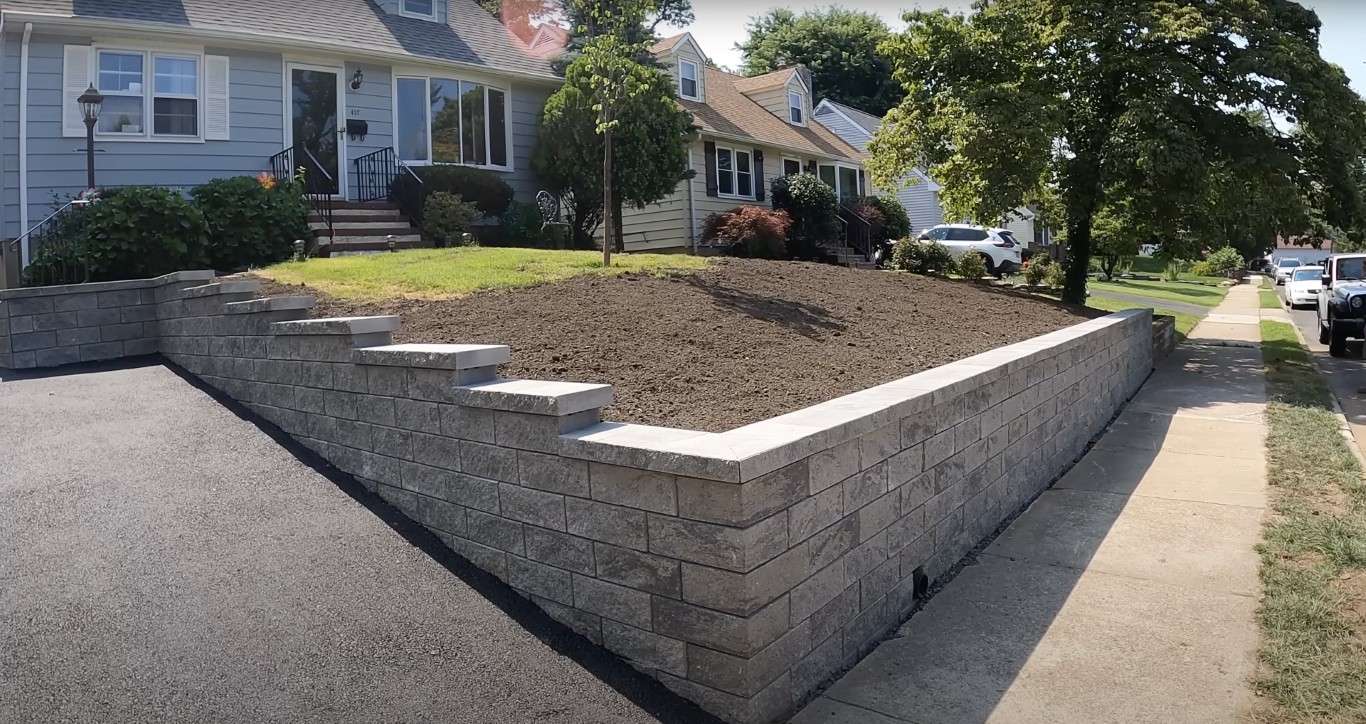
Interlocking concrete blocks create attractive, durable retaining walls suitable for most residential applications. These modular systems come in various colors, textures, and styles. Installation is faster than poured concrete, and the interlocking design provides flexibility to follow curves and terrain. Block walls work well for heights up to 4 or 5 feet. Taller walls may require engineering and additional reinforcement. The variety of available blocks means we can match almost any aesthetic from natural stone appearance to modern clean lines.
- Segmental interlocking block systems
- Poured concrete cantilever walls
- Concrete masonry unit walls
- Cast-in-place reinforced concrete
- Hybrid systems combining materials
Poured Concrete Walls
For taller walls, heavy loads, or situations requiring maximum strength, poured concrete provides the best solution. We excavate a footing below the frost line, install forms and reinforcement steel, then pour concrete to create a monolithic structure. These walls handle significant height and lateral pressure. Surface treatments can create various appearances from smooth modern finishes to textured or colored surfaces. While more labor-intensive than block walls, poured concrete offers maximum strength and longevity.
Engineering and Drainage
Retaining walls are structural elements that must be designed correctly to perform safely. The wall must resist soil pressure, support its own weight, and remain stable through all weather conditions. Improper design or construction leads to leaning, cracking, or complete failure. We approach retaining walls with the engineering knowledge and construction expertise they require.
Drainage is absolutely critical for retaining wall performance. Water trapped behind a wall creates tremendous pressure that can cause failure. We install proper drainage systems including gravel backfill, drainage pipes, and weep holes that allow water to escape safely. This removes the hydrostatic pressure that causes most retaining wall failures. Good drainage extends wall life dramatically and prevents the bulging, leaning, or collapse that results from water buildup.
Foundation requirements depend on wall height, soil conditions, and the load being retained. Shorter walls may only need compacted gravel bases. Taller walls require concrete footings extending below the frost line. Very tall walls or poor soil conditions may need deeper footings or even piles. Like our foundation work, we evaluate site conditions thoroughly and design appropriate support systems. This engineering ensures your wall stands strong for decades.
Building codes often regulate retaining walls, especially those over certain heights or near property lines. We navigate permit requirements and ensure your wall meets all applicable codes. For walls requiring engineering, we work with licensed structural engineers to provide stamped plans. You receive a retaining wall that not only looks good but also meets professional standards and legal requirements.